
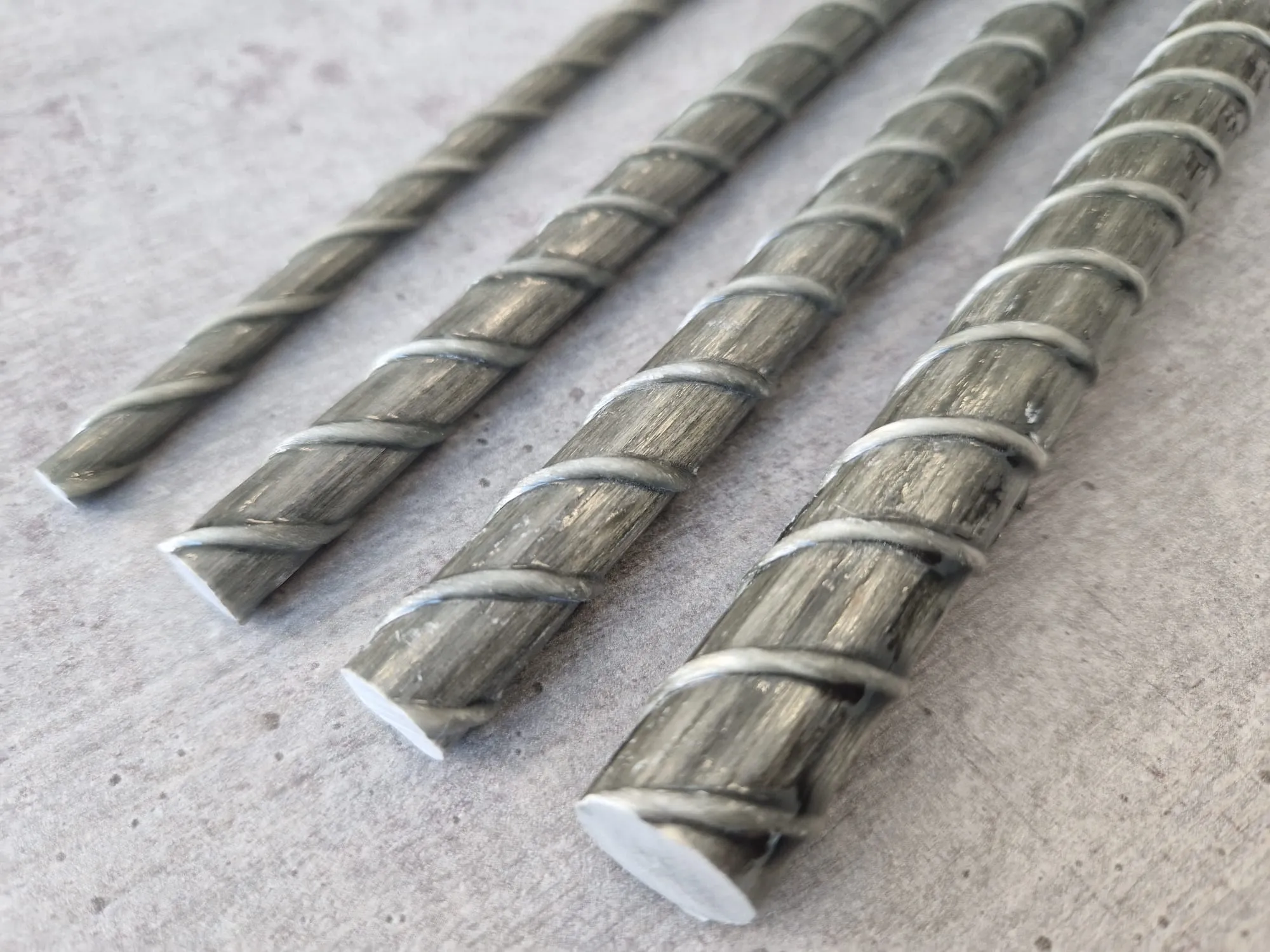

Basalt vs GFRP.
Basalt-fibre (BFRP) and glass-fibre (GFRP) reinforcement are close cousins — both corrosion-free, both non-conductive, both far lighter than steel. The honest difference is not the bar in isolation; it is codification, supply and track record. Here is how to choose.
Closer than
the marketing suggests.
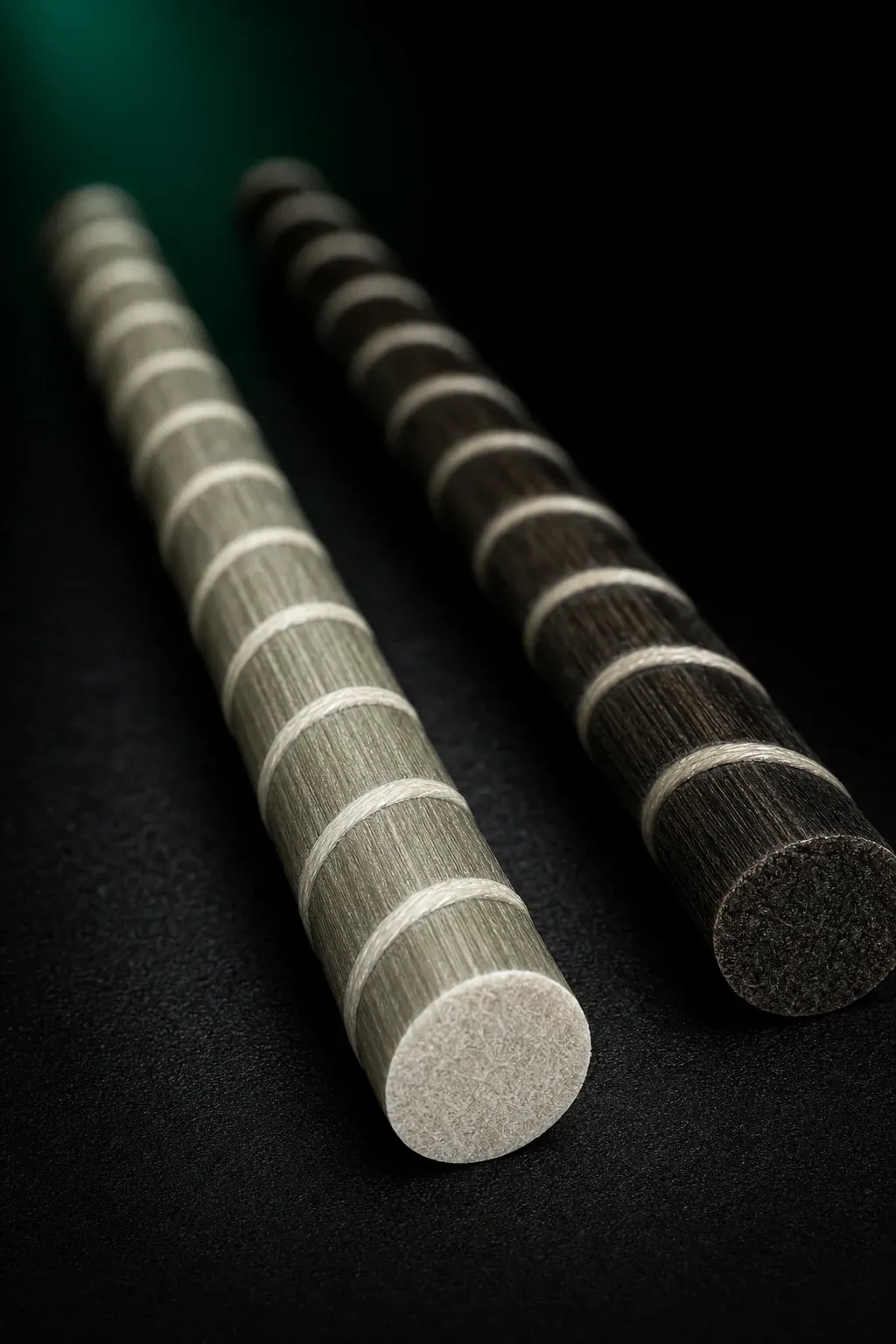
At the fibre level the two are comparable: similar corrosion immunity, similar electromagnetic neutrality, similar weight. Basalt fibre can show a slightly higher modulus in some grades; glass fibre has the deeper, more consistent industrial supply. For most projects the deciding factor is not fibre chemistry — it is whether the bar is backed by a usable certification and a reliable supply chain. That is where GFRP leads today.
Glass and basalt,
side by side.
| Property | GFRP (glass) | BFRP (basalt) |
|---|---|---|
| Fibre source | E-glass fibre | Basalt (volcanic rock) fibre |
| Corrosion | Corrosion-free | Corrosion-free |
| Tensile strength | 940–1,200 MPa (ETA 23/0523) | Comparable; grade-dependent |
| Stiffness (E-modulus) | ≈ 52 GPa | Often slightly higher; grade-dependent |
| Alkaline resistance | Validated for alkaline concrete (pH 9–13) | Good; depends on fibre sizing |
| Electromagnetic | Non-conductive · non-magnetic | Non-conductive · non-magnetic |
| Codification | ETA · EAD · ACI 440 · CSA · fib · ISO | Thinner standards coverage to date |
| Supply | Established EU supply, 6 M+ m/yr | More limited supply base |
Bar-level values are grade- and manufacturer-specific; figures on request.
The decisive
difference.
A reinforcement bar is only as specifiable as the standards behind it. GFRP is covered end to end. ETA 23/0523 and the EAD for European market access; ACI 440, fib Model Code 2020, CSA and ISO 10406-1 design codes internationally. Basalt-fibre reinforcement has, to date, a thinner published-standards base — which can turn into a project-specific assessment burden on the engineering office. For a project that must be specified and approved without a derogation, GFRP is the lower-friction path.
Standards & certifications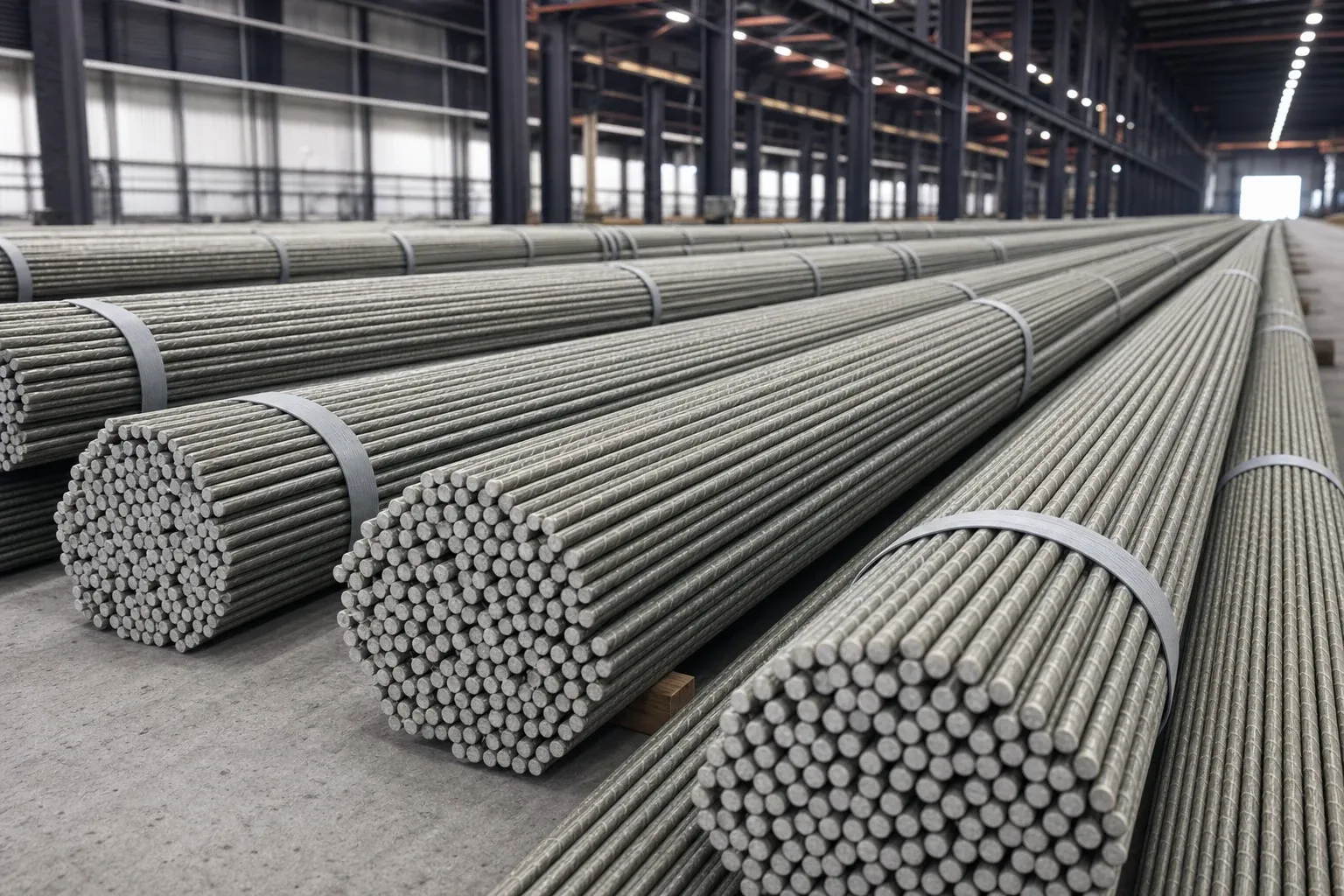
What you can
source today.
Glass-fibre reinforcement has the broader, more mature European supply base, which steadies both lead time and price. Composite Group manufactures GFRP at 6 M+ metres per year with multi-year, LME-indexed price stability. Basalt-fibre bar is available but from a narrower supply base, which can matter on programme-critical or large-volume work.
Our recommendation.
For the great majority of corrosion-driven projects, GFRP is the pragmatic choice: equivalent fibre performance, full certification, and a supply chain you can build a programme on. Basalt is worth evaluating where a specific fibre property is decisive and the standards route is acceptable for the project. Send us the brief and we will advise on the honest basis — fibre, certification and supply.