
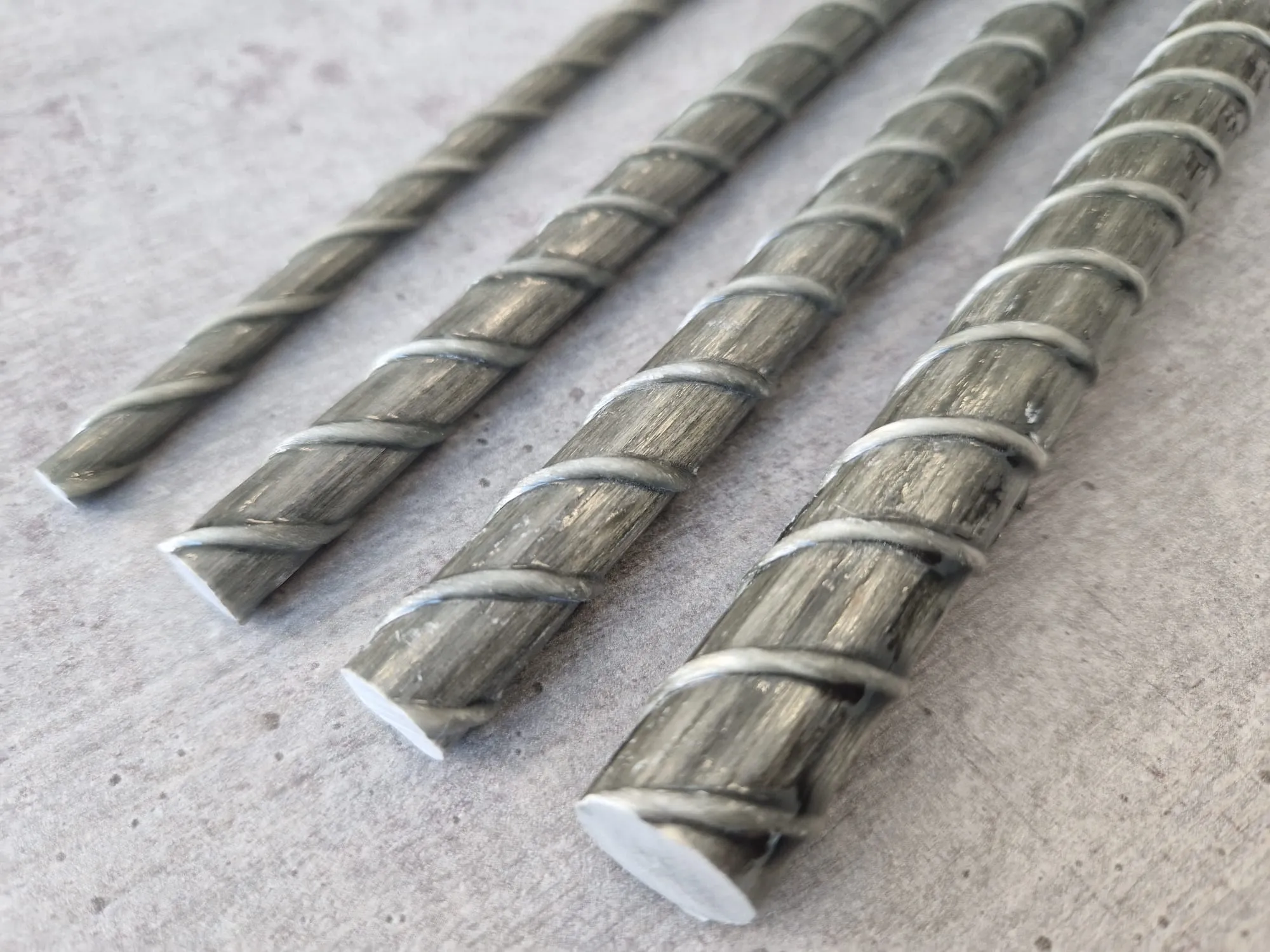

How it is made.
Composite Group GFRP rebar is made by Nidletrusion — a second-generation continuous-winding process that forms the bar and its bond profile in a single run. Here is the line, the process and the quality control behind every metre.
The production
line.
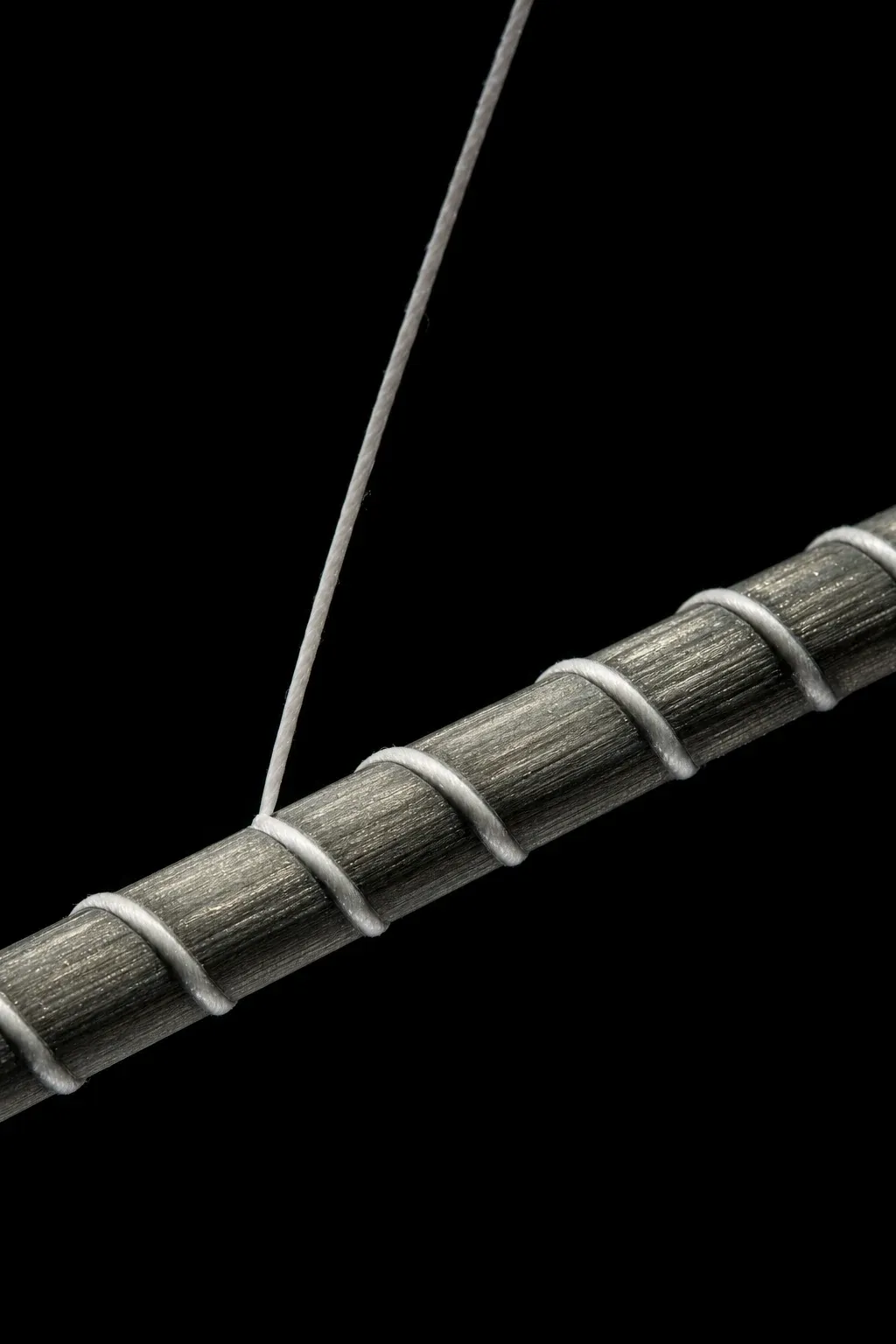
Continuous E-glass fibre enters the line. It is saturated in nano-epoxy resin, wound with its surface profile and cured — and leaves as finished bar in one pass. Four stages.
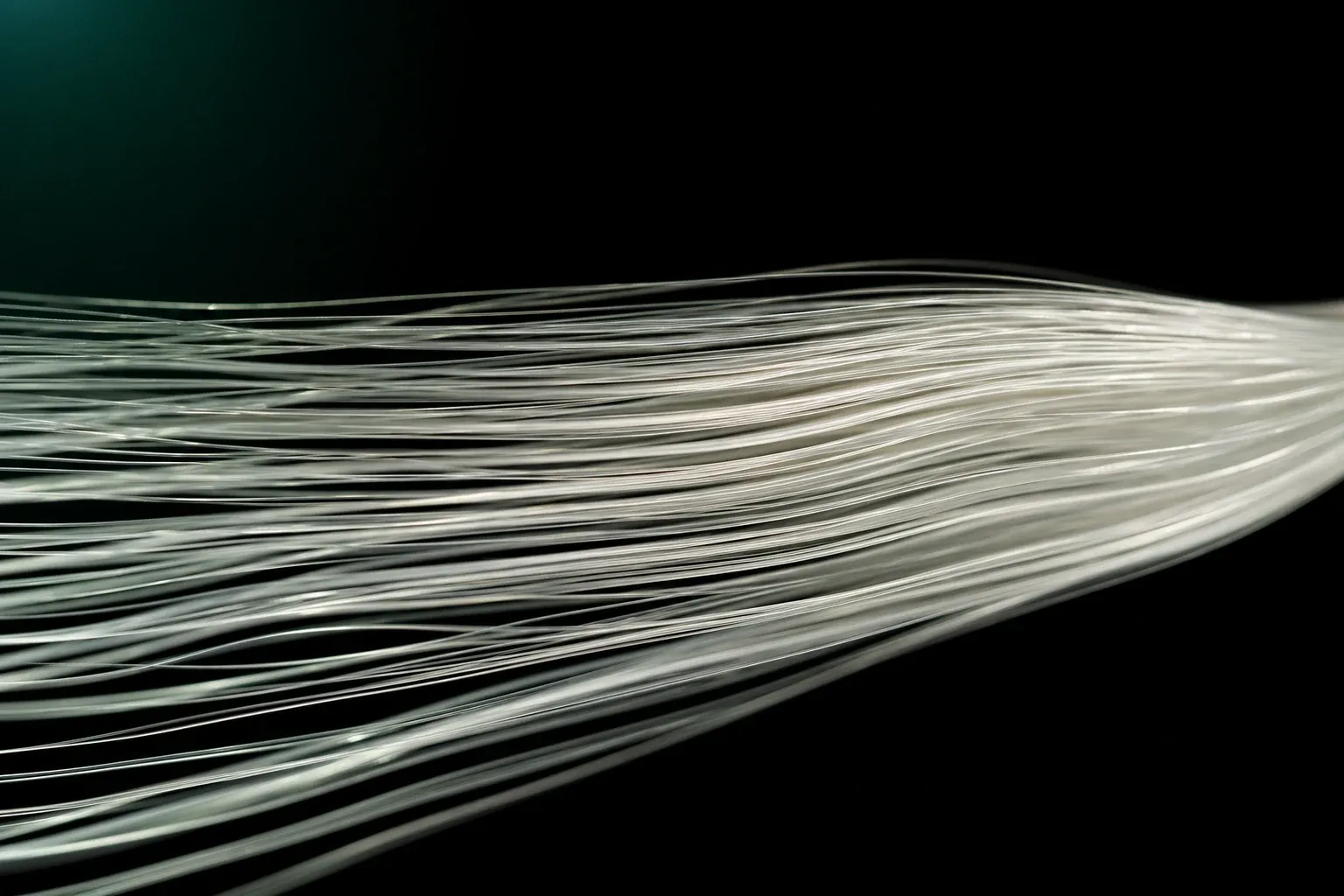
- 01Continuous fibres
E-glass roving drawn from spools, never cut.
- 02Resin bath
Nano-epoxy impregnation — full saturation, no voids.
- 03Helical winding
Anchorage profile formed in the same continuous run.
- 04Cure & coat
Sand-coating, thermal cure, dimensional check.
One run,
continuous fibre.
Conventional FRP rebar is made in two stages. A straight rod is pultruded, then surface ribs are formed by a secondary mechanical operation. The second operation interrupts the continuity of the fibre that gives FRP its strength. Nidletrusion forms the anchorage profile during production, in a single continuous run, by winding rather than machining. The fibres stay continuous and undamaged, the line runs faster, and there is no length limit imposed by a second station. Bar comes off in straight lengths or continuous coils.
Glass, resin,
and a gripping surface.
The bar is over 80 % continuous E-glass fibre by mass, bound in a nano-epoxy resin matrix. The surface is sand-coated and helically wrapped so the bar develops full mechanical bond with the surrounding concrete — a bond coefficient comparable to ribbed steel. The result is non-magnetic, non-conductive and radio-transparent, and immune to the corrosion that ends steel.
Tested,
batch by batch.
Production runs under factory production control assessed to AVCP system 1+ for the European Technical Assessment (ETA 23/0523). Each diameter ships with its mill test certificate; the values on it are the values from the line, not a catalogue. Consistency of the fibre-to-resin ratio and the wound profile is what keeps the certified performance certified.
Made in Slovakia,
at scale.
Composite Group manufactures GFRP rebar at its Galanta facility with a capacity of 6 M+ metres per year. The process itself is part of the environmental case: producing GFRP emits up to 70 % less CO₂ than the equivalent steel rebar, verified by EuCIA. Manufacturing and material pull in the same direction.