
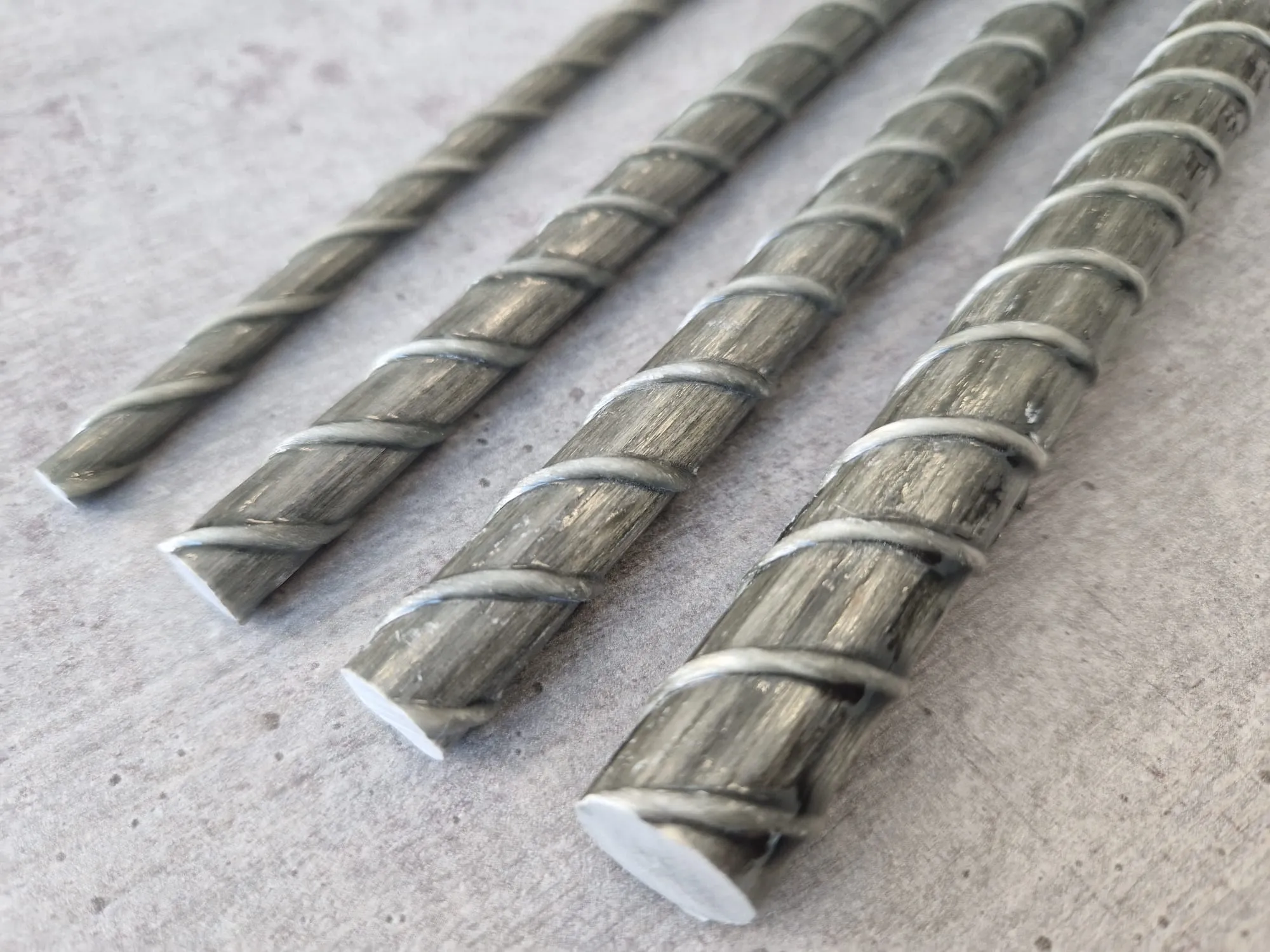

01 / 08 COASTAL VIADUCTS
Saltwater bridges, piers, breakwaters.
Pier-caps, deck slabs and parapets take the full force of the salt spray. Modelling typically doubles the design life versus steel.
Eight places GFRP belongs — from coastal viaducts to MRI rooms. Each one has a different reason steel falls short, and a different conversation with the design office.
Pier-caps, deck slabs and parapets take the full force of the salt spray. Modelling typically doubles the design life versus steel.
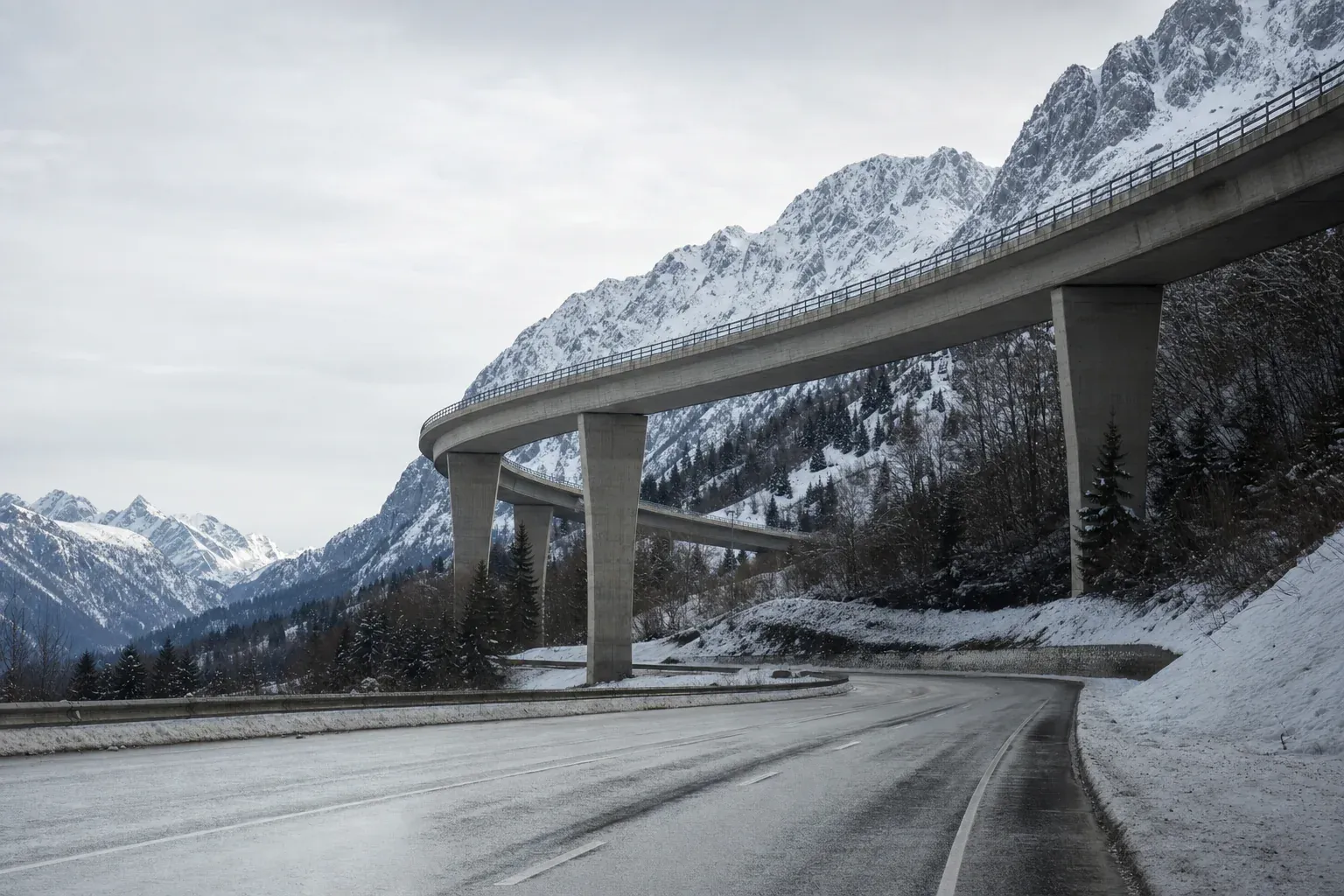
Mountain pass viaducts and motorway decks. In Switzerland, corrosion drives CHF 260–510 million a year in road-structure maintenance — over half of all structure upkeep.

Extensive tunnel and metro use, including major Swiss alpine projects. Steel reinforcement breaks 5G, Wi-Fi and rail signalling. GFRP does not.

MRI rooms, transformer pads, radio-frequency labs — where the design rules out any steel at all.
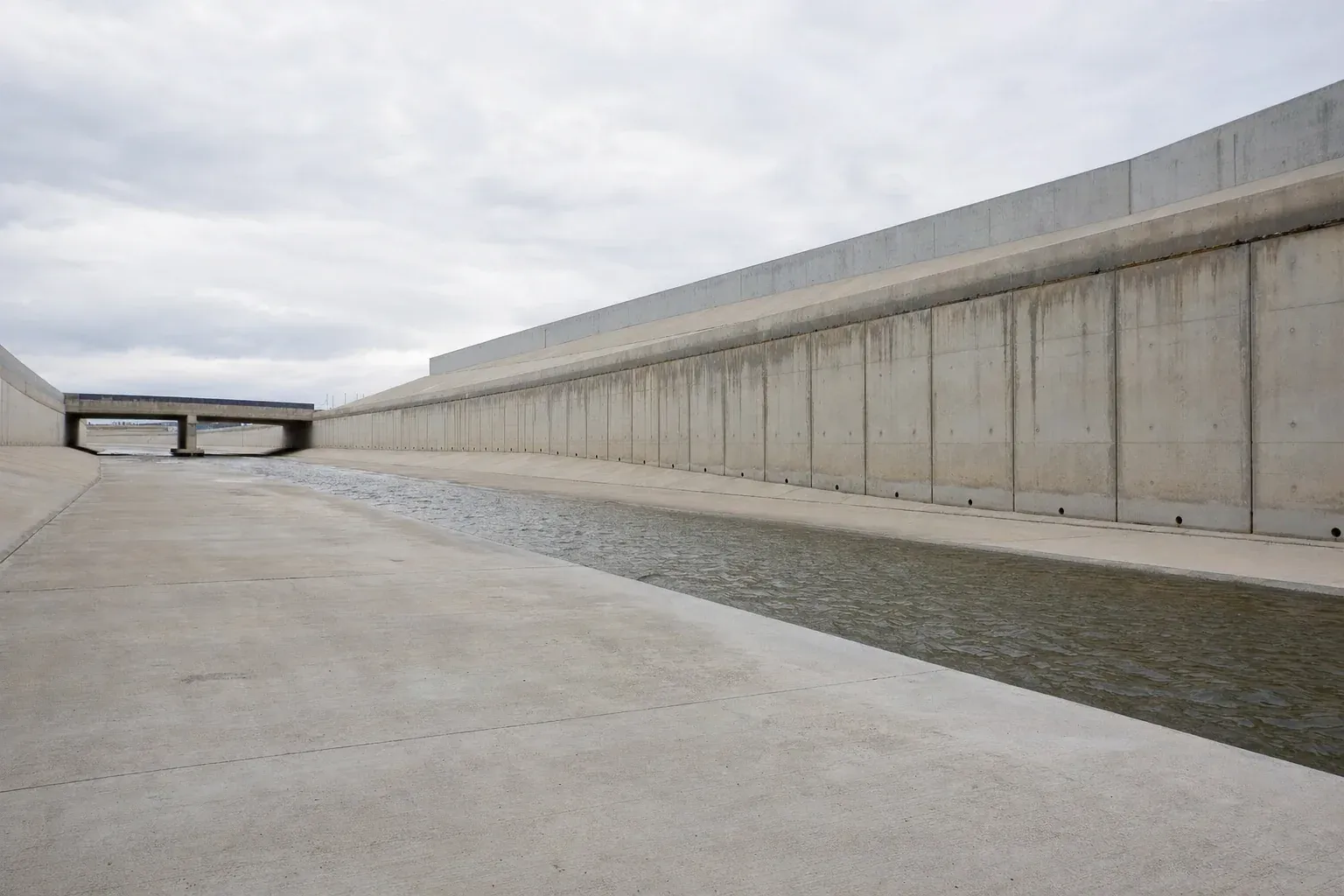
Wastewater treatment plants, mining process floors, the Jizan flood channel — 21.3 km, the world's largest FRP-reinforced concrete structure.
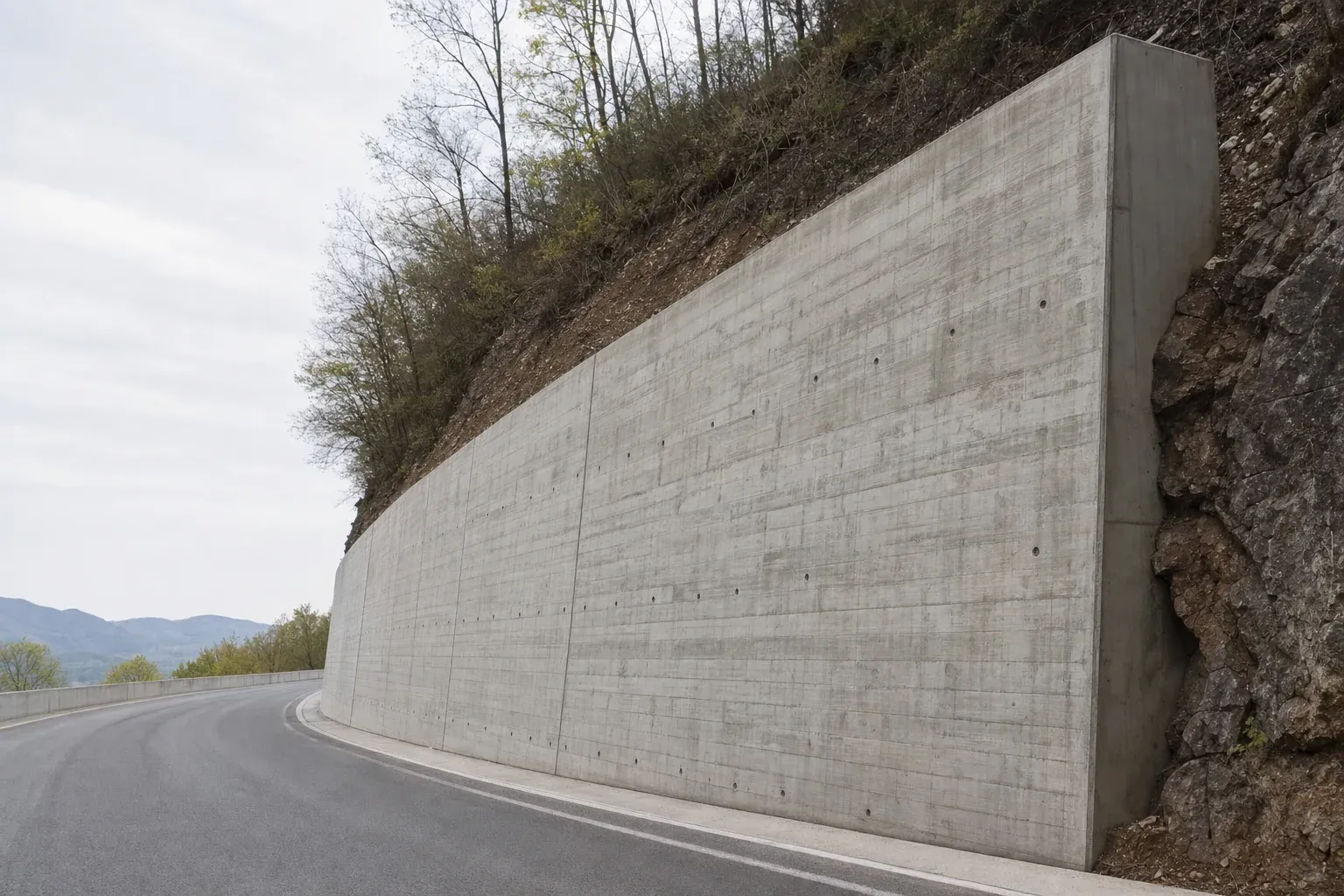
Cantilever walls where the load-bearing rebar sits on the outside, exposed to salt, and can't be inspected for the life of the structure.

Roadside parapets and motorway barriers. Direct chloride spray, impact-rated, and increasingly required to host antennas and structural-health sensors.
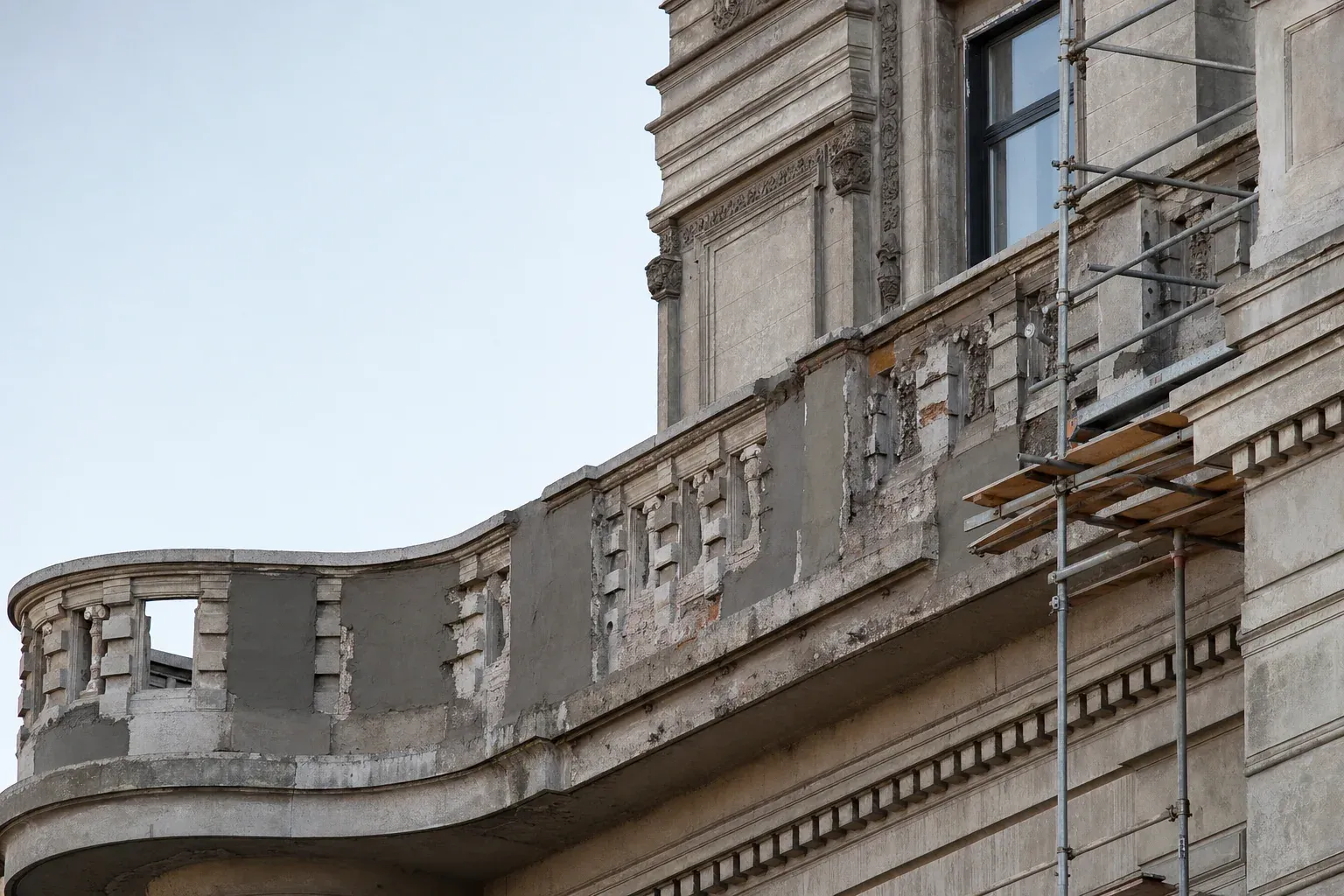
Concrete refurbishment with welded GFRP mesh and repair mortar — light, low-cover and corrosion-free. Suited to parapets, balconies and thin-section repairs.
Some engineering offices come to GFRP with a problem steel can't solve — chloride attack, de-icing salt, radio interference. Others arrive with a specific part to design — a bridge deck, a retaining wall, a parapet — and a hint that GFRP is worth a look. Both lead here.
The first half of this page is organised by environment. The second half by structural part. The matrix in the middle shows where the two meet.
GFRP usually enters a project because steel can't handle one thing. The four cases below cover most of what we ship — and each one is a different conversation.
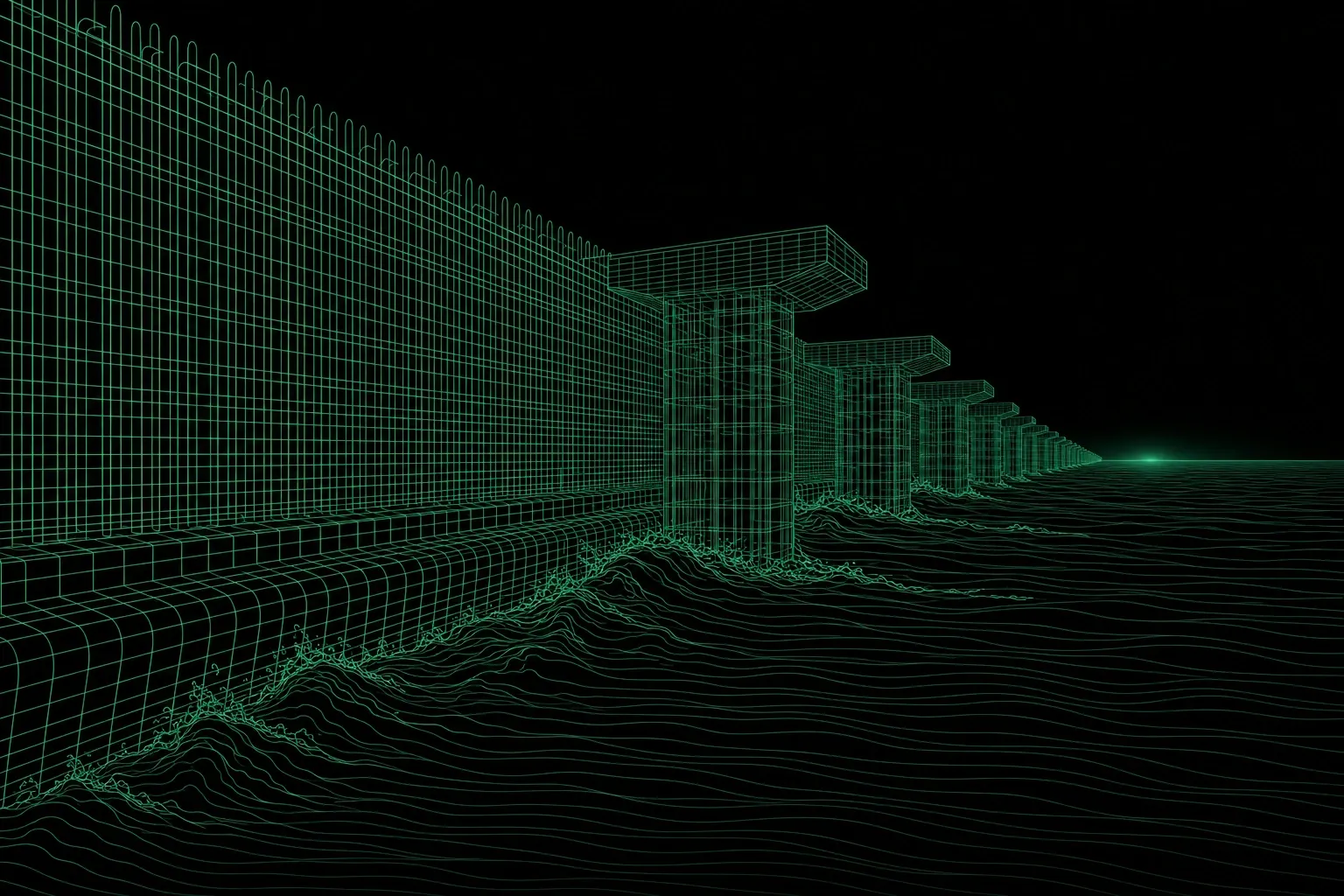
Saltwater piers, sea walls, breakwaters, marine viaducts, ports. The steel inside the concrete rusts through decades before the structure is worn out.

Mountain pass bridges, motorway barriers, tunnel linings, retaining walls along salted highways. In Switzerland, corrosion drives CHF 260–510 million a year in structure repairs.
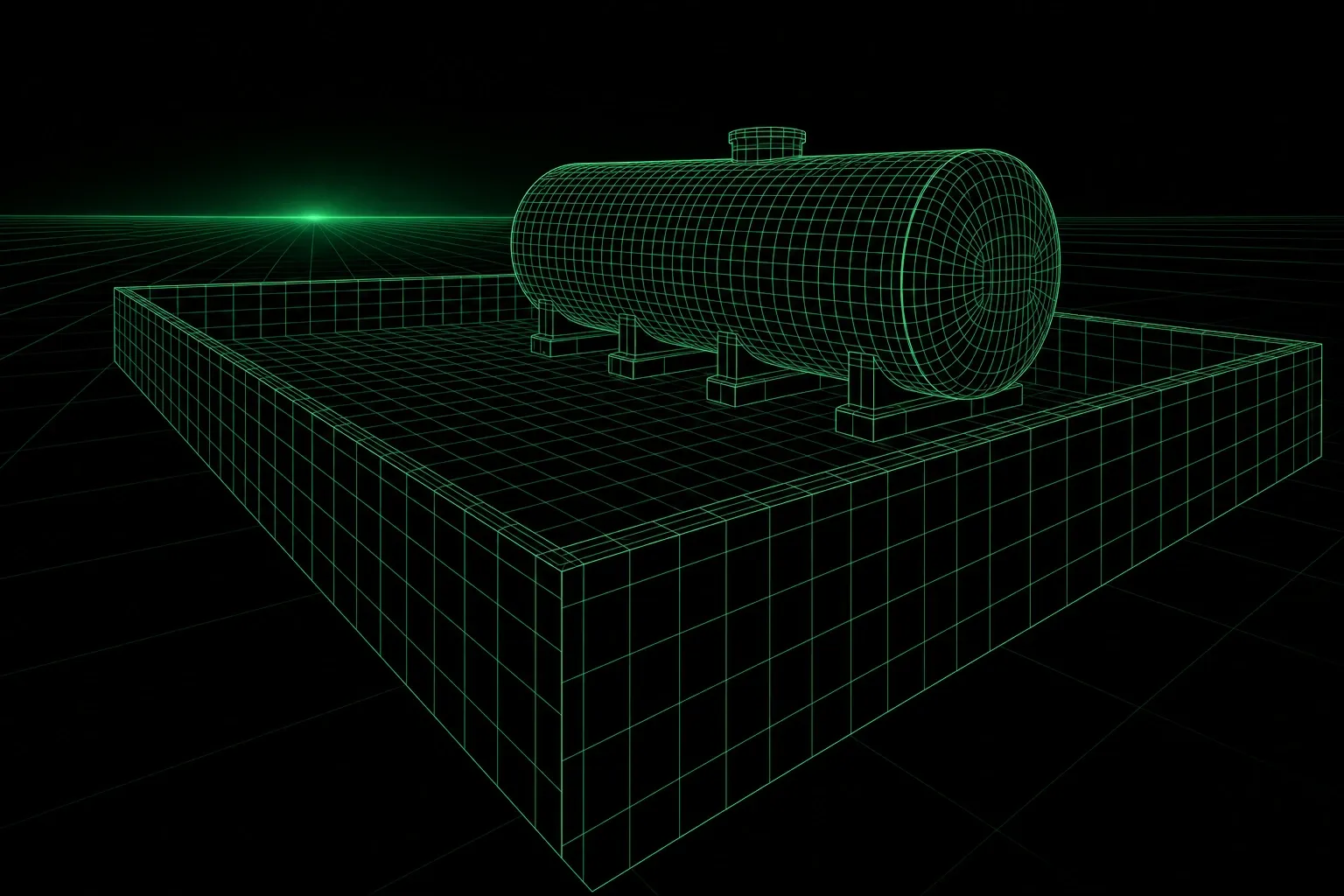
Wastewater plants, drainage channels, containment slabs, mining floors, acidic industrial floors. GFRP doesn't react with chlorides, sulfates or alkalis.

MRI suites, transformer pads, rail signalling, sensor-embedded structures, 5G-equipped tunnels. GFRP is non-magnetic, non-conductive and lets signals pass straight through.
Most of what we ship goes into one of the six parts below. The diagrams are just illustrative — the real detailing is worked out together in the technical workshop.
GFRP top mat in the chloride zone; a steel bottom mat is kept where ductility is needed.
GFRP on the outer face — it removes the inspection problem with hidden external rebar.
Direct salt-spray exposure. GFRP also enables embedded sensors and 5G antennas.
Radio-transparent for 5G and signalling. Easy for tunnel-boring machines to cut straight through.
Constant water and salt runoff. Welded mesh is the common format.
Lay-bys, hard shoulders, pavement edges. Top-mat GFRP with steel below.

Where GFRP gets used often, sometimes, or rarely. This isn't a rulebook — it's simply what engineering offices ask us for.
GFRP is not a universal replacement for steel. It is a specialised solution for environments where corrosion drives lifecycle cost.
Four cases where GFRP is the wrong answer. We'd rather tell you up front — engineers trust a manufacturer that names the limits before they have to find them.
Cable-stayed elements that sway in the wind, railway sleepers under heavy repeated loads, machine foundations that vibrate non-stop. GFRP handles fatigue less well than steel — these stay with steel.
Parts in high-seismic zones where the design relies on steel yielding to absorb energy. GFRP doesn't yield — it stays elastic until it breaks — so on its own it doesn't fit the brief. A steel + GFRP hybrid section can.
Columns and beams whose fire rating depends on the reinforcement itself. The resin in GFRP softens at high temperature, so it belongs in buried, concrete-encased work — not exposed.
Tight curves below the bendable diameter, bends in several directions, re-bending on site. The continuous-fibre process has shape limits that steel doesn't.
This page shows you where GFRP fits. Where you go next depends on your role — an engineer specifying a structure, a developer defending a budget, or a distributor serving a market.
 Bouygues
  FROOT USA