

Cost & lifecycle ROI.
The honest answer to “what does GFRP cost?” is two answers. Per kilogram, bare steel is cheaper. Over the life of a structure exposed to corrosion, GFRP is not — and that is the number that decides the project.
Price per metre,
or cost over a lifetime.
A price-per-metre comparison answers the wrong question. Bare carbon steel is the cheapest reinforcement to buy and the most expensive to own where chloride reaches the bar. The right comparison is total cost of ownership: the purchase, plus every repair, recoating and closure the structure needs across its design life. On that basis the ranking changes.
Against the steel
these structures need.
Corrosion-exposed structures are not specified with bare black bar — they need corrosion-protected steel: stainless, galvanised, epoxy-coated, or thicker cover with a cathodic-protection regime. Measured against that specification, GFRP is level on first cost. From there it diverges: GFRP carries no corrosion budget to spend, so the decades of intervention the protected-steel option still requires fall away.
GFRP vs steelWhat you stop paying for.
Most of a chloride-exposed structure’s cost is not in the rebar — it is in keeping the steel from corroding and repairing it when that fails. GFRP removes that chain. Four cost lines come off the model.
No rust-driven spalling means no recurring patch-repair and concrete-replacement campaigns at year 20, 30 and 40.
No epoxy recoating, no galvanising, no cathodic-protection system to install, power and maintain.
Fewer lane and asset closures for inspection and repair — often the largest hidden cost on trafficked infrastructure.
Corrosion is no longer the failure mode to monitor, which lightens the long-term inspection burden.
Lighter to buy,
lighter to move.
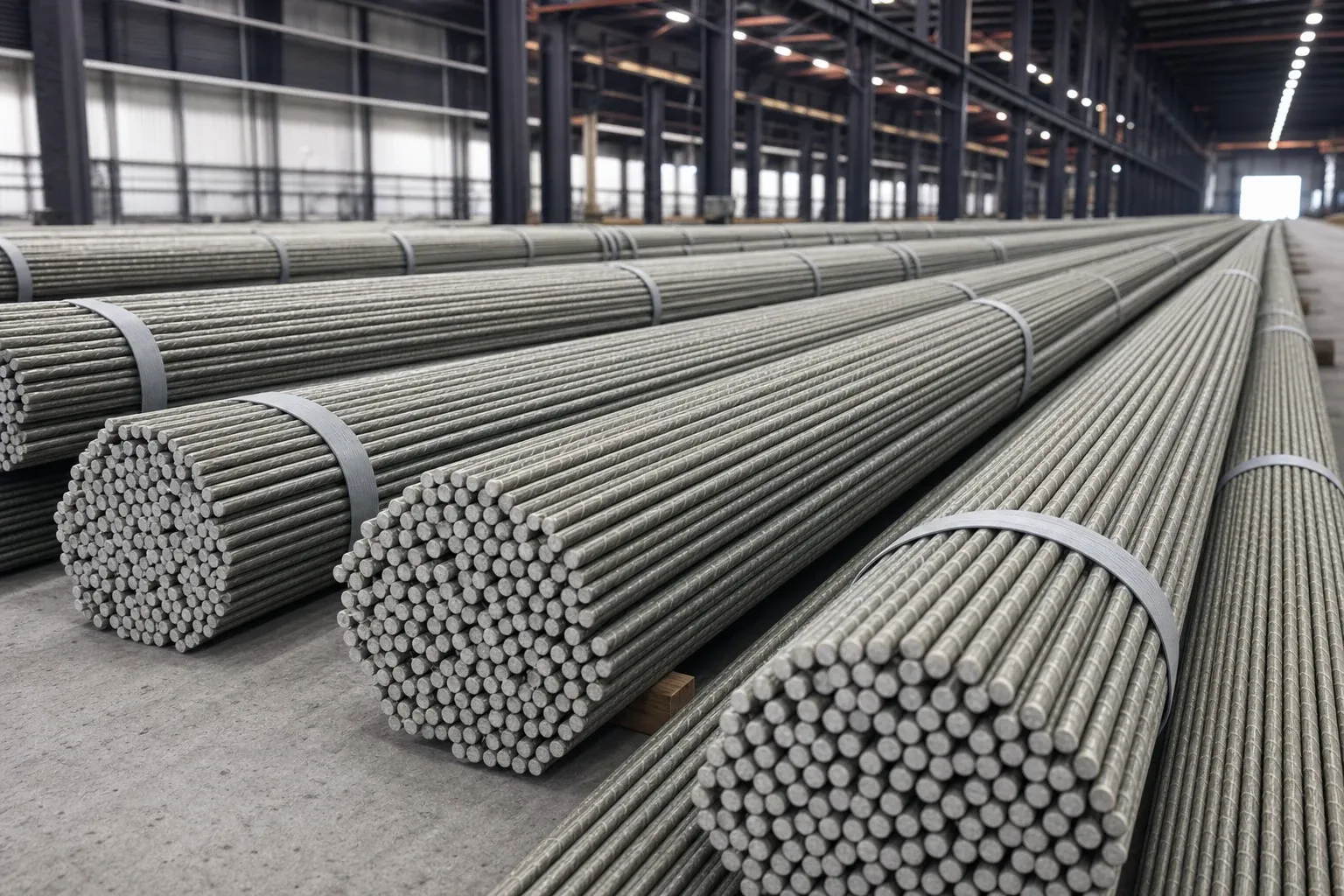
GFRP is about four times lighter than steel. One truck of GFRP replaces seven of steel rebar — fewer deliveries, less transport carbon, lighter and faster handling on site, and continuous coils that cut joint waste. These are first-order savings that land before the lifecycle case even begins.
A coastal lifecycle exampleCosted years
ahead, not by the day.
GFRP pricing is not exposed to the daily volatility of the steel market. We offer multi-year price stability indexed to the London Metal Exchange steel reference. A project can be costed and committed years ahead with a predictable reinforcement line. Exact terms are set per cooperation.
When steel is
the cheaper answer.
In a dry, benign interior with no corrosion exposure, the lifecycle premium has nothing to pay back — bare steel is simply cheaper and the right call. GFRP earns its place where corrosion, electromagnetic neutrality or weight is the deciding constraint. Where none of those apply, we will say so.
Get the number
for your structure.
Send us the exposure class, the element and the design life. We will return a like-for-like lifecycle comparison against the protected-steel option — figures are project-specific and documented, not promotional.